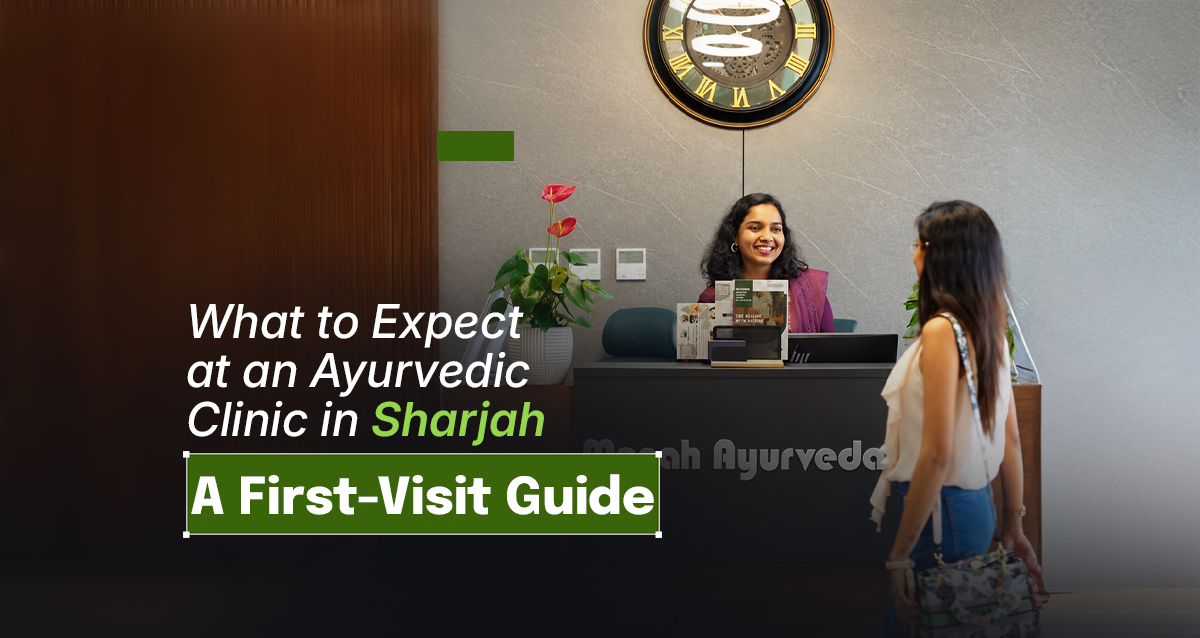
If you are visiting an Ayurvedic clinic for the first time, you may wonder what happens after booking your appointment. Will the first visit involve a consultation, an assessment, a therapy, or all three? Knowing what to expect can make your appointment more comfortable and help you prepare the information your practitioner may need.
A typical first visit begins with an Ayurvedic consultation and individual assessment. The practitioner may discuss your concerns, health history, symptoms, diet, sleep and daily routine before recommending an appropriate approach. The exact process can vary between clinics and practitioners.
This guide explains the usual patient journey, from booking and consultation to assessment, treatment planning and follow-up, with a focus on practical information for anyone considering Ayurveda in Sharjah.
What Happens at an Ayurvedic Clinic in Sharjah?
A first visit usually follows a simple process:
Booking → Consultation → Assessment → Treatment recommendation → Therapy, herbal preparation or lifestyle guidance, where appropriate → Follow-up
Your first appointment may focus mainly on understanding your concerns rather than starting treatment immediately.
An Ayurvedic practitioner may ask about your symptoms, previous health history, medications, diet, sleep, daily routine and treatment goals. Based on the discussion and assessment, the practitioner may suggest an individualized plan. This could include an Ayurvedic therapy, herbal preparation, dietary or lifestyle guidance, or a combination of these.
There is no single treatment that is suitable for everyone. Recommendations should be based on your individual circumstances and the practitioner’s assessment.
What Happens During Your First Ayurvedic Consultation?
Your first Ayurvedic consultation is the starting point for understanding your concerns and deciding what type of care may be appropriate.
The practitioner may ask why you decided to visit, what symptoms you have and how long they have been present. You may also be asked about:
- Previous diagnoses or treatments
- Current medications and supplements
- Diet and eating habits
- Digestion and bowel habits
- Sleep patterns
- Daily routine and physical activity
- Stress and lifestyle
- Your treatment goals
Depending on the practitioner and your concerns, a traditional Ayurvedic assessment may also be included.
Be open and accurate when answering questions. Information that may seem unrelated to your main concern can still help the practitioner understand your overall situation.
A good consultation should also give you an opportunity to ask questions. Before agreeing to treatment, make sure you understand what is being recommended, why it is being recommended and what the next steps involve.
What Information Should You Prepare Before Your Visit?
You do not need extensive preparation for a first Ayurvedic consultation. However, having relevant information ready can make the appointment more useful.
Consider preparing:
- A list of current medications and supplements
- Relevant medical reports or previous test results
- Details of previous diagnoses or treatments
- Your symptoms and when they began
- Known allergies or previous reactions
- Usual dietary habits
- Relevant lifestyle information
- Pregnancy status, where applicable
- Questions you want to ask
Do not stop or change prescribed medication because you are starting Ayurvedic treatment. Make sure the practitioner knows about medicines and supplements you currently take.
How Does an Ayurvedic Practitioner Assess You?
Ayurveda uses a traditional framework for understanding an individual’s constitution and health. This includes concepts such as Prakriti and the three Doshas: Vata, Pitta and Kapha. An Ayurvedic practitioner may consider your reported symptoms, health history, diet, lifestyle and traditional Ayurvedic observations. Depending on the practitioner and your concerns, traditional assessment methods may also be used.
This assessment is intended to understand your individual needs and help guide treatment recommendations. It should not be presented as a replacement for appropriate medical diagnosis. If you have a serious, persistent or unexplained symptom, seek advice from a qualified healthcare professional. Since assessment methods may vary across practitioners, it is good to ask what the assessment will involve and how the findings will guide your recommended treatment plan.
What Treatments Might Be Recommended?
Ayurvedic treatment in Sharjah can involve different therapies depending on your concerns and individual assessment. Your practitioner may recommend one therapy, several therapies or lifestyle guidance.
Common therapies may include:
- Abhyanga: A traditional Ayurvedic oil massage using warm oil and practitioner-directed massage techniques.
- Shirodhara: A traditional therapy involving a steady stream of liquid, commonly oil, directed over the forehead.
- Kizhi: A therapy using herbal preparations contained in cloth bundles and applied to the body using traditional techniques.
- Swedana: A traditional Ayurvedic sweating or steam-based therapy. The method can vary according to the treatment.
- Panchakarma: A group of traditional Ayurvedic procedures. It should not be treated simply as a routine spa treatment and, when recommended, should be undertaken under appropriate professional supervision.
Herbal preparations and lifestyle guidance may also form part of an Ayurvedic treatment plan. Herbal products are not automatically risk-free and may interact with medicines, so discuss any herbal products or supplements with the appropriate healthcare professional.
Will You Receive Treatment on Your First Visit?
Not necessarily.
Your first visit may primarily involve consultation and assessment. Whether treatment takes place on the same day can depend on your concerns, the practitioner’s recommendation, the type of treatment, preparation requirements, availability and the clinic’s process.
If you would prefer to receive treatment on your first visit, ask when booking whether consultation and therapy can be scheduled together.
What Should You Wear and Bring to an Ayurvedic Clinic?
Wear comfortable clothing for your consultation. If you are receiving an Ayurvedic massage or another therapy, the clinic may provide instructions about changing or suitable clothing.
Depending on the treatment, requirements can vary.So before your appointment, do check with the clinic.
It can also be useful to bring:
- Medication or supplement information
- Relevant medical reports
- Previous test results, where useful
- A list of questions about your symptoms or treatment
- Insurance information, if applicable
You should also feel comfortable asking about privacy, changing facilities and what to expect before a treatment begins.
What Happens After an Ayurvedic Treatment?
Aftercare depends on the therapy you receive. The practitioner may provide guidance about diet, daily activities, rest or other aspects of aftercare. If your treatment plan involves multiple sessions, you may also receive advice about when to return.
Follow-up appointments allow the practitioner to review your progress and decide whether the plan should continue, change or be reconsidered. If you experience an unexpected or concerning reaction, contact the clinic and seek appropriate medical advice rather than assuming it is simply part of the treatment.
How to Choose an Ayurvedic Clinic in Sharjah?
When comparing an Ayurvedic clinic in Sharjah, look beyond the list of therapies offered. Consider the following:
- Practitioner qualifications: Check who will conduct the consultation and provide treatment. Make sure the practitioner meets the applicable healthcare qualification and licensing requirements in the UAE.
- Clear consultation process: The clinic should be able to explain how the initial assessment works and how treatment recommendations are made.
- Transparent treatment information: You should understand what a therapy involves before agreeing to it, including any preparation or aftercare requirements.
- Hygiene and professional standards: Treatment rooms, equipment and products should be handled appropriately.
- Realistic claims: Be cautious of guaranteed cures or claims that every condition can be treated naturally.
- Medication disclosure: The practitioner should know about relevant medications, supplements and health conditions.
- Follow-up: Understand how your progress will be reviewed and who you should contact if you have questions or concerns after treatment.
For people looking for Ayurveda in Sharjah, location is also a practical consideration. A clinic that is convenient to reach can make regular follow-up easier, particularly when a treatment plan involves multiple appointments.
Questions to Ask Before Starting Ayurvedic Treatment
Before starting treatment, consider asking:
– What treatment are you recommending?
– Why is it appropriate for me?
– What will happen during the treatment?
– How many sessions might I need?
– Are there any preparation or aftercare instructions?
– Could the treatment or any herbal preparation interact with my medications?
– When should I return for follow-up?
– Who should I contact if I experience an unexpected reaction?
Clear answers can help you understand the proposed treatment and make a more informed decision about your care.
When Should You Speak to a Medical Doctor Before Ayurvedic Treatment?
Ayurveda should not be used to delay appropriate medical care.
Speak with an appropriate medical professional before starting treatment if you are pregnant, considering treatment for a child, have a chronic condition, take prescription medication, have recently had surgery, or have severe, unexplained or rapidly worsening symptoms.
Tell the Ayurvedic practitioner about relevant health conditions, medications and supplements. Do not stop or replace prescribed medical treatment without advice from the healthcare professional managing your condition.
Frequently Asked Questions
What happens during the first visit to an Ayurvedic clinic?
The first visit usually begins with a consultation covering your concerns, symptoms, health history, medications, diet and lifestyle. A traditional Ayurvedic assessment may follow before the practitioner recommends an appropriate treatment or follow-up plan.
Do I need to prepare anything before an Ayurvedic consultation?
Prepare information about your medications and supplements, relevant medical records, previous reports, symptoms and questions. This can help the practitioner understand your concerns and discuss the next steps.
Will I receive Ayurvedic treatment on my first visit?
Not always. It depends on the practitioner’s assessment, treatment type and the clinic’s process. Ask when booking whether consultation and therapy can take place during the same appointment.
What should I wear to an Ayurvedic clinic?
Wear comfortable clothing. For massage or other therapies, the clinic may provide specific instructions about changing or suitable clothing. Check the requirements when booking.
How do I choose an Ayurvedic clinic in Sharjah?
Look for qualified practitioners, a clear consultation process, professional hygiene, transparent treatment information and realistic claims. You should also be able to discuss medications, existing health conditions and follow-up care openly.
Can I take Ayurvedic treatment while using prescription medicine?
Tell the Ayurvedic practitioner about all prescription medicines, supplements and relevant health conditions. Some herbal products can interact with medicines. Do not stop or change prescribed medication without medical advice.
A More Informed First Visit
Knowing what to expect at an Ayurvedic clinic in Sharjah can make your first appointment feel less uncertain. The process generally begins with a conversation about your concerns and relevant health information, followed by an assessment and discussion of appropriate next steps.
Whether the recommendation involves Ayurvedic therapy, herbal preparation, lifestyle guidance or follow-up care, you should understand what is being recommended and why before beginning treatment.
If you are considering an Ayurvedic consultation in Sharjah, choose a clinic where you can ask questions openly, share your health history honestly and receive clear information about the proposed care. Being informed can help you approach your first visit with greater confidence and make decisions that are appropriate for your individual needs.