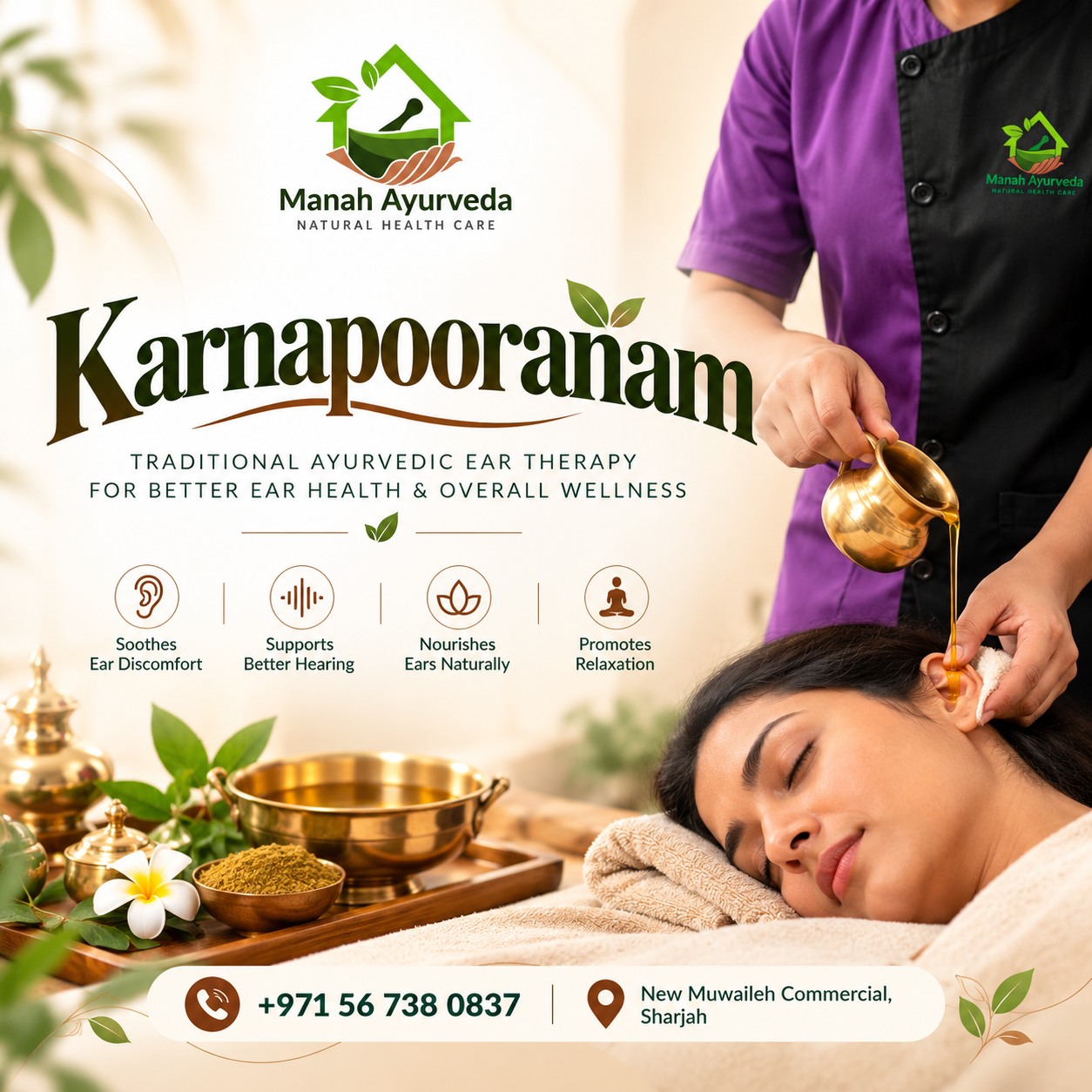
Karnapooranam is a traditional ayurvedic treatment that includes application of a special formulation of oil to the ears with proper guidance. It is part of the traditional treatment for ears and holistic wellness as per Ayurveda. But traditional usage must not be misunderstood with medically proved ear treatments.
For people exploring Karnapooranam in Sharjah, understanding the traditional procedure, its intended benefits, and important safety precautions can help them make informed decisions. This article explains what the therapy involves, who should exercise caution, and how to enquire about Ayurvedic services at Manah Ayurveda in New Muweilah Commercial, Sharjah.
What Is Karnapooranam in Ayurveda?
Karnapooranam is a traditional Ayurvedic therapy in which appropriately prepared oil is applied to the ears as part of a therapeutic practice. The term is associated with the Ayurvedic approach to ear care, which considers individual needs and overall well-being.
In traditional Ayurveda, Karnapooranam is discussed as one of the practices used in certain wellness and ear-care routines. The specific approach may depend on the practitioner’s assessment and the individual’s circumstances.
It is important to understand that traditional use does not automatically establish medical effectiveness. Scientific evidence supporting Karnapooranam as a treatment for specific ear conditions remains limited. Anyone considering this traditional Ayurvedic ear therapy should understand its limitations and seek appropriate medical advice when experiencing ear-related symptoms.
How Is Karnapooranam Traditionally Performed?
Traditionally, Karnapooranam involves the use of specially prepared oil selected according to the therapeutic approach and individual assessment. A qualified practitioner should first discuss the person’s health history, current symptoms, and suitability for the procedure.
The practitioner should explain the proposed approach, the materials being used, possible risks, and any precautions required before proceeding. Appropriate hygiene and careful handling are essential whenever a therapy involves the ear.
The exact procedure, ingredients, and duration may vary between traditional practices and providers. These details should be confirmed directly with the practitioner rather than assumed.
Karnapooranam should not be attempted at home without appropriate guidance. Introducing oil into the ear can be unsuitable for certain conditions, particularly when the eardrum may be damaged or an infection is present.
What Are the Traditional Benefits of Karnapooranam?
In Ayurvedic practice, Karnapooranam is traditionally associated with ear care, comfort, relaxation, and holistic wellness. Some people explore traditional therapies as part of a broader personal wellness routine.
However, these traditional associations should be distinguished from benefits established through high-quality clinical research. There is insufficient reliable evidence to conclude that Karnapooranam can cure ear infections, reverse hearing loss, repair eardrum damage, or prevent hearing problems.
The suitability and potential effects of any ear therapy depend on individual circumstances, and a traditional treatment should not replace appropriate medical assessment.
People considering Karnapooranam treatment should ask the practitioner what the therapy is intended to achieve, what evidence supports those intended outcomes, and what risks may apply to them. Clear information helps individuals make decisions based on realistic expectations rather than unsupported health claims.
Is Karnapooranam Suitable for Everyone?
No. Karnapooranam may not be appropriate for everyone, and individual assessment is important before considering any treatment involving oil in the ear.
People experiencing ear pain, discharge, suspected eardrum perforation, an existing ear infection, or sudden changes in hearing should seek medical advice before considering the procedure. They should not introduce oil or other substances into the ear unless advised by an appropriate healthcare professional.
Additional caution is necessary for people with a history of ear surgery or known eardrum problems. A qualified medical professional can assess whether an ear condition requires specific treatment.
If hearing loss develops suddenly, or ear symptoms occur alongside severe dizziness or other concerning symptoms, seek urgent medical assessment. Do not delay necessary care while trying a traditional therapy.
Karnapooranam and Common Ear Problems
Ear symptoms can have several different causes, so identifying the underlying problem is important before choosing a treatment.
- Blocked ears: Earwax buildup, pressure changes, and other conditions can cause a blocked sensation. The appropriate treatment depends on the cause; oil-based therapy should not be assumed to clear the blockage.
- Ear discomfort: Pain or irritation may result from infection, inflammation, injury, or other conditions. Medical assessment can help determine the cause.
- Hearing loss: Hearing changes may be associated with earwax, infections, inner-ear conditions, or other medical problems. Karnapooranam is not an established treatment for restoring hearing.
- Eardrum damage: A perforated eardrum requires appropriate medical assessment. Karnapooranam should not be presented as a proven way to repair it.
An ENT specialist can assess persistent or concerning ear symptoms and recommend appropriate treatment. Traditional Ayurvedic therapies should not replace necessary medical care.
How to Choose an Ayurvedic Therapy Provider in Sharjah
When looking for Ayurvedic ear therapy in Sharjah, consider the provider’s qualifications, relevant licensing, hygiene practices, consultation process, and approach to patient safety.
Before choosing a treatment, ask whether the practitioner is appropriately qualified and licensed to provide the proposed therapy in the UAE. Confirm that your symptoms and medical history will be assessed before any procedure involving the ears.
You should also ask about the oils or other materials used, potential side effects, expected outcomes, and circumstances in which the practitioner would recommend medical referral.
A responsible provider should explain the limitations of traditional therapies and avoid guaranteeing results. If you have an existing ear condition, consulting an ENT specialist before considering an oil-based procedure is a sensible precaution.
Enquiring About Ayurvedic Services at Manah Ayurveda
Manah Ayurveda is located in New Muweilah Commercial, Sharjah, UAE, and offers a point of contact for people interested in traditional Ayurvedic therapies and personalised wellness care.
If you are considering Karnapooranam, contact the centre to confirm whether the therapy is currently available, understand the consultation requirements, and discuss suitability before making an appointment.
Final Thought
Karnapooranam has a place in traditional Ayurvedic practice, but its potential benefits should be considered alongside the limitations of current scientific evidence. Anyone experiencing ear symptoms should prioritise appropriate medical assessment before considering an oil-based therapy.
Interested in Ayurvedic wellness services in Sharjah? Contact Manah Ayurveda at +971 56 738 0837 to enquire about available therapies and consultation requirements.
Frequently Asked Questions
1. What is Karnapooranam in Ayurveda?
Karnapooranam is a traditional Ayurvedic practice involving the application of specially prepared oil to the ears. Its traditional use does not establish that it effectively treats specific ear conditions.
2. How is Karnapooranam traditionally performed?
The practice generally involves oil application under practitioner supervision. The exact method and materials should be explained by the provider following an appropriate assessment.
3. What are the traditional benefits of Karnapooranam?
It is traditionally associated with ear care, comfort, and holistic wellness. Strong clinical evidence confirming specific medical benefits is limited.
4. Can Ayurveda reverse hearing loss?
There is no reliable evidence that Karnapooranam can reverse hearing loss. Hearing changes should be assessed by a qualified healthcare professional, particularly if they occur suddenly.
5. What should I do about blocked ears?
The cause may be earwax, pressure changes, or another condition. Avoid inserting objects or using ear oils without appropriate advice, especially if you have pain, discharge, or a history of eardrum problems.
6. Can Ayurveda repair a perforated eardrum without surgery?
Karnapooranam is not a proven method of repairing a perforated eardrum. Consult an ENT specialist to discuss appropriate assessment and treatment.
7. Is Karnapooranam suitable for everyone?
No. People with ear infections, discharge, pain, suspected eardrum damage, or hearing changes should seek medical advice before considering an ear-based therapy.