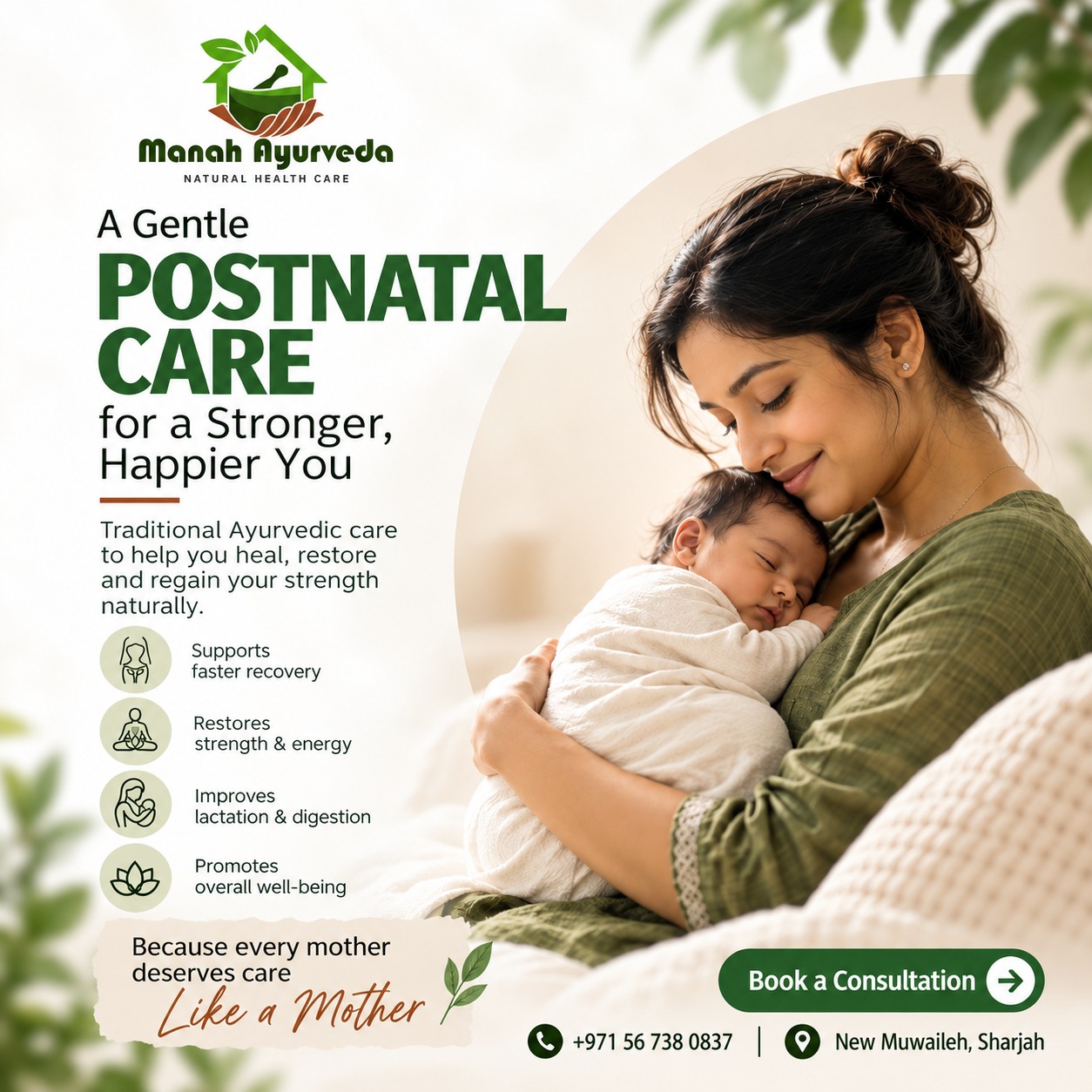
Traditional Ayurvedic care to help you heal, restore and regain your strength naturally.
The experience of holding your new born baby is amazing; however, postnatal period is characterized by fatigue, body pain, sleepless nights and mood changes. Indian and Kerala couples residing in UAE might face additional difficulties while adjusting to the postnatal period due to separation from their family members and routine life that follows soon.
Proper postnatal care ensures adequate recovery for the mothers after childbirth. The current guide focuses on the five most important aspects of postnatal care, postpartum care for mothers and the role of traditional Ayurvedic postnatal care like Sutika Paricharya. Furthermore, this guide provides safety measures along with the information when medical assistance should be sought.
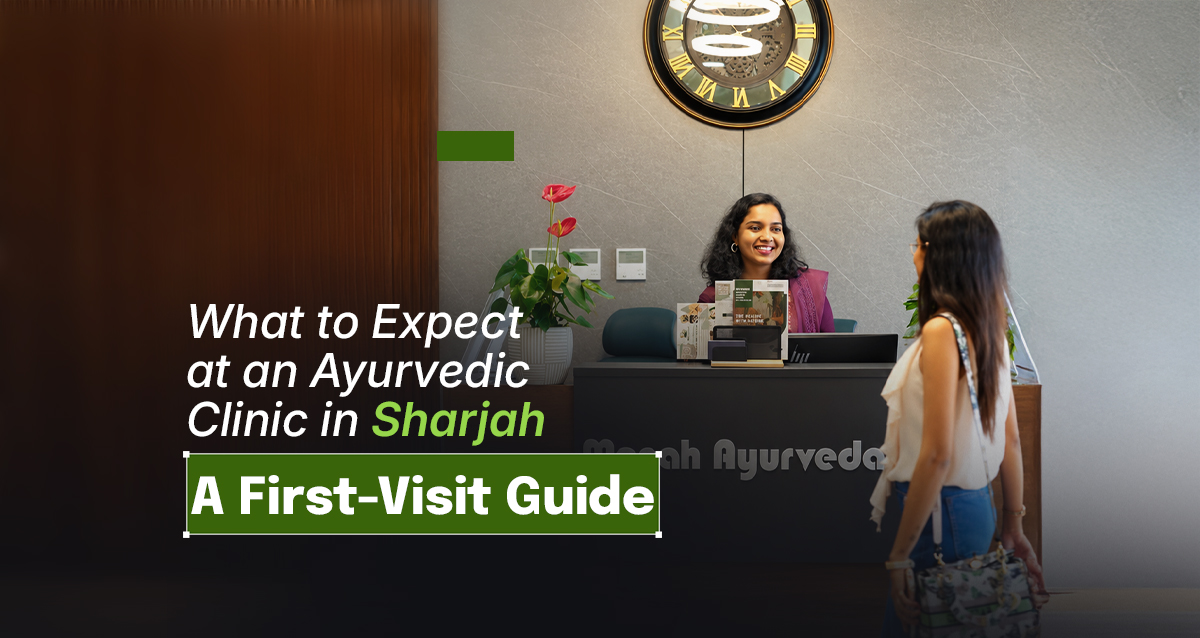
At Manah Ayurveda Health Care Center at New Muwaileh, Sharjah is the center where mothers can consult on traditional Ayurvedic postnatal care.
What Is Postnatal Care?
Postnatal care is the care provided to a mother and her baby after childbirth. The first six weeks are particularly important, although recovery can continue for several months depending on the mother’s health and delivery experience. The World Health Organization emphasises regular, supportive care during this period. WHO postnatal care recommendations.
Postnatal care and postpartum care are more or less the same term, which includes medical examination, physical recovery, nursing guidance, mental stability, and even domestic assistance.
The traditional practice of the 40-day resting period for mothers in many Indian and Kerala families allows them to recuperate with nutritious food, proper sleep, and family help. The same can be done by mothers in Sharjah along with family members and professional caregivers according to their doctors’ recommendations.
5 Importance of Postnatal Care
The five main benefits of postnatal care are supporting physical healing, restoring strength, assisting breastfeeding, protecting emotional well-being and identifying health complications early.
1. Helps the Body Heal After Delivery
The body needs time to recover after vaginal delivery or a C-section. Appropriate rest, wound care, hygiene and medical follow-up help mothers manage recovery and identify complications before they become serious.
2. Restores Strength and Energy
Childbirth, disrupted sleep and caring for a newborn can leave mothers exhausted. Balanced meals, adequate fluids, rest and gradual, doctor-approved movement help support energy levels during recovery.
3. Supports Breastfeeding
Breastfeeding may take time and practice. Access to a lactation professional can help mothers with positioning, attachment, feeding difficulties and concerns about milk supply. Adequate nutrition and support also matter.
4. Protects Emotional Well-Being
Hormonal changes, sleep deprivation and the demands of newborn care can affect mood. Family support, opportunities to rest and professional help when needed can make the transition easier. Persistent sadness or anxiety deserves attention.
5. Helps Identify Health Problems Early
Postnatal check-ups allow healthcare professionals to assess healing, bleeding, blood pressure, mental health and other concerns. They also provide an opportunity to discuss contraception, feeding and recovery questions.
Postpartum Care for Mother: What Every New Mom Needs
Postpartum care for a mother includes medical follow-up, nourishing food, hydration, rest, gentle movement when appropriate and emotional support.
For mothers in Sharjah, daily life can add challenges: husbands may return to work soon after delivery, extended family may be abroad, and air-conditioned indoor environments can make it easy to overlook regular hydration. Planning practical help before the baby arrives can make recovery more manageable.
Postpartum Care Checklist
- Prioritise rest: Accept help with meals, household tasks and newborn care so you can sleep when possible.
- Eat balanced meals: Include protein, vegetables, fruit, whole grains and other foods suited to your dietary needs.
- Stay hydrated: Keep drinking water regularly, especially while breastfeeding and during the UAE’s hot weather.
- Follow medical advice: Attend your postnatal appointment and follow instructions for wound care, medication and physical activity.
- Ask for feeding support: Contact a qualified breastfeeding professional if feeding is painful or you are worried about your baby’s intake.
- Make space for emotions: Tell someone you trust how you feel and seek professional support if distress persists.
- Arrange practical help: Share responsibilities with your husband, relatives or trusted support providers.
These simple steps provide a starting point, not a substitute for individual medical advice.
Ayurvedic Postnatal Care: 4 Benefits for New Mothers
The Ayurvedic system of recovery from childbirth is termed as Sutika Paricharya. The traditional methods may involve dietary recommendations, rest, oil massages, and other therapeutic measures that depend on specific needs of an individual.
Vata and Agni are some of the traditional terms used in Ayurveda to denote balance and digestion respectively. This does not mean that these are scientific definitions of post-partum recovery as there is no sufficient research on most of the Ayurvedic treatments.
Supports Faster Recovery
Rest, appropriate nutrition and gentle care are central to traditional postnatal routines. Massage may provide comfort for some women, but it has not been established as a way to speed healing after every type of delivery.
Restores Strength and Energy
A planned routine can encourage mothers to make time for rest, nourishing meals and personal care. These supportive habits may help mothers feel more comfortable while their bodies recover.
May Support Lactation and Digestion
Traditional postnatal diets aim to provide nourishment during recovery. However, no Ayurvedic treatment should be presented as a guaranteed way to increase breast milk. Persistent feeding difficulties need assessment by a qualified healthcare professional.
Promotes Overall Well-Being
Gentle, personalised care may offer relaxation and an opportunity to focus on personal comfort. Any oil massage, herbal steam or other therapy should be assessed for suitability, particularly after surgery or while breastfeeding.
Important: Ayurvedic treatments complement medical care; they do not replace your gynaecologist’s advice or postnatal check-ups. Herbal products and oils should only be used after a qualified practitioner checks their suitability.
Postnatal Care at Manah Ayurveda, Sharjah
The Manah Ayurveda Health Care Centre located in New Muwaileh, Sharjah mentions Post-Natal Treatment Methods under the category of ‘Sutika Paricharya’ on its website. Mothers and their families can visit this centre to know more about the available treatment methods and their appropriateness at the given stage.
Depending on the services confirmed by the centre, the discussion may include an Ayurvedic consultation, oil-based therapies or a herbal steam bath. You can also explore its information about Ayurvedic massage and herbal steam bath.
Treatment should be planned according to the mother’s health, delivery type and medical advice. Mothers recovering from a C-section must obtain clearance from their treating doctor before beginning massage or other therapies. Breastfeeding mothers should have the suitability of oils and any herbal products checked before use.
To ask about available postnatal care options, contact Manah Ayurveda at +971 56 738 0837 or visit the contact page. Confirm current services, packages, practitioner qualifications and insurance arrangements directly with the centre.
Book a Consultation – Manah Ayurveda
When Should You Seek Medical Help After Delivery?
Some symptoms after childbirth require urgent medical attention rather than massage or home remedies. Contact your doctor or emergency services if you experience:
- Heavy or sudden bleeding, especially with dizziness or faintness.
- Fever, worsening abdominal pain or foul-smelling discharge.
- Increasing redness, swelling or discharge around a surgical wound.
- A severe headache or changes in vision.
- Pain or swelling in one leg, chest pain or difficulty breathing.
- Persistent low mood, severe anxiety or difficulty coping.
Chest pain, breathing difficulties, heavy bleeding and other severe symptoms may be emergencies. Seek immediate medical assistance rather than waiting for an Ayurvedic appointment.
Final Thoughts: Every Mother Deserves Care
Recovering from childbirth does not have to be done in isolation. Be it your first child or another one, proper postpartum care will help you get back into shape and prepare yourself for parenting.
In case you are in Sharjah and wish to take up postpartum care from the traditional Ayurvedic perspective, consult your physician and ask about what options are available at Manah Ayurveda.
Because every mother deserves care like a mother.
Book a Consultation | Call or WhatsApp: +971 56 738 0837
Frequently Asked Questions
1. What are the 5 importance of postnatal care?
The five importance of postnatal care are supporting physical healing, restoring strength and energy, assisting breastfeeding, protecting emotional well-being and identifying complications early. Regular medical check-ups, proper nutrition, rest and practical support help mothers navigate recovery after childbirth.
2. What does postpartum care for a mother include?
Postpartum care includes medical check-ups, wound care when needed, balanced meals, hydration, rest, breastfeeding support and emotional care. Gentle movement can be introduced when medically appropriate. Ayurvedic therapies may complement recovery if suitable, but they should not replace medical treatment or follow-up.
3. How long does postnatal care last after delivery?
The first six weeks are a key postnatal period, but recovery varies between individuals. Some mothers need additional support for several months, particularly after a C-section or complicated delivery. Continue medical follow-up according to your healthcare professional’s recommendations.
4. Is Ayurvedic postnatal care safe after a C-section?
It depends on the mother’s healing, the treatment and medical clearance. Do not begin abdominal massage, herbal steam or other therapies without approval from your treating doctor. Breastfeeding mothers should also have oils and herbal products checked for suitability before use.